About Bamba
Bamba is one of Israel’s most iconic snack brands, made by Osem-Nestle, and a household name for generations of Israeli consumers. BOA Ideas also works with Osem- Nestle across several of its other brands.
When the Bamba team came to us with the idea of letting customers create personalized packaging featuring their own photo and text, the concept itself was simple and fun. The challenge was turning it into an automated system that could operate at a meaningful production scale.
That became the starting point for a project connecting the online design experience with the printing facility, production line, packaging, and shipping - building the operational and technological infrastructure required behind every personalized bag.
Challenges
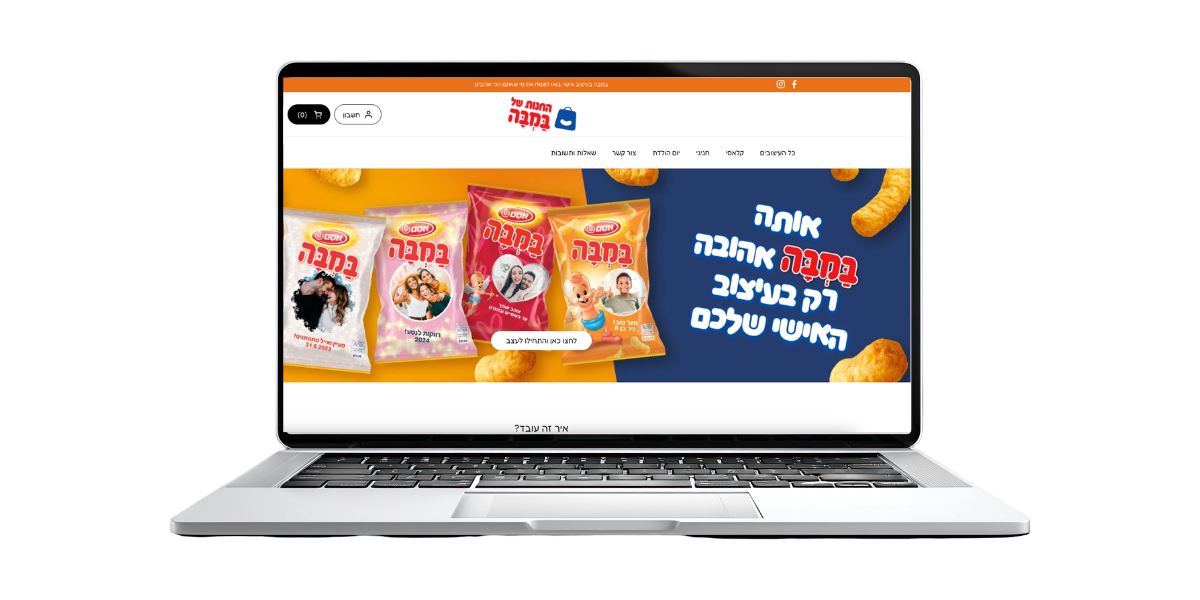
At first glance, the experience is simple: customers choose an occasion-based template, upload a photo and text, and order their personalized Bamba. But behind every order is a process that balances creative freedom with brand guidelines, printing requirements, and the realities of physical manufacturing.
The design interface had to be simple and accessible while operating within clearly defined parameters. Every design needed to fit the packaging format, remain technically viable for production, and stay consistent with Bamba’s brand language. We also needed to review and control customer-submitted images and text, since that content would ultimately appear on a physical product carrying the Bamba brand.
The more significant complexity began after checkout. Every design created in Shopify needed to move automatically to the printing facility and become part of an industrial printing process. The packaging material is printed on large rolls containing designs from multiple customer orders, so we had to plan not only how the data would be transferred to print, but also how the designs would be arranged and how each order would remain identifiable throughout the process. This required a complex integration and close collaboration with HP Indigo.
Once the printed rolls arrive at the factory, the challenge continues onto the production line. Bags come off the machine continuously, with each group belonging to a different customer order. Factory employees shouldn’t have to visually inspect each bag to determine where it belongs. The process required an identification mechanism that follows each order through production, indicating when one order ends and the next begins, which box the bags belong in, and which label needs to be applied.
And all of this had to work accurately and intuitively in an active manufacturing environment, where the people using the system every day are factory production teams, not ecommerce or logistics specialists.
Solutions
Personalized Design Interface
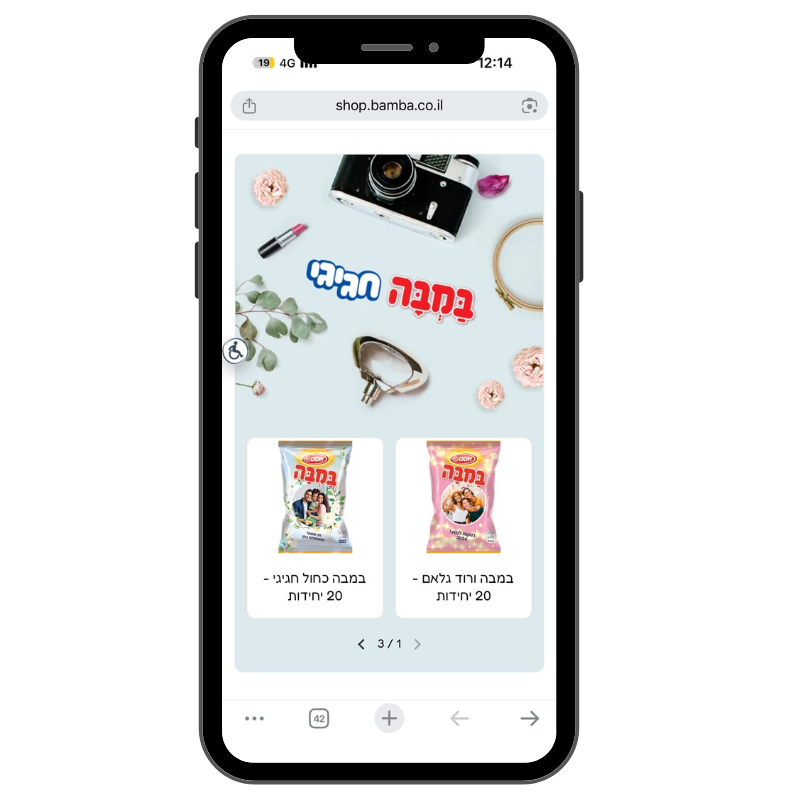
We developed a design experience that allows customers to choose a template for a specific occasion and add their own photo and text, all within predefined parameters. This gives customers the freedom to create personalized packaging while ensuring that every design remains aligned with both brand and production requirements.
From Shopify Directly to Print
In collaboration with HP Indigo, we created an automated integration between Shopify and the printing process, allowing order information and customer designs to move directly into print production without requiring each individual order to be prepared manually.
The system had to take separate digital orders and translate them into a printing workflow that reflects how the packaging material is actually produced – on large rolls that are then transferred to the factory.
Designing for Production
Personalization didn’t end with the graphic file. We had to plan in advance how different customer designs would be arranged on the packaging material, ensuring that every bag could still be associated with the correct order after printing and production.
The system was designed around packs of 20 bags, using identification mechanisms that remain with the packaging throughout the production line and allow different orders to be clearly separated.
Identification, Scanning, and Packaging
Once the bags come off the production line, factory employees scan the identifier on the packaging. From there, the system guides the next steps: which order the bag belongs to, whether a new box needs to be opened, and when it is time to move on to the next order.
When a new box is opened, the system also generates the relevant box label, connecting the physical packaging process with the information required for fulfillment and shipping.
Built for the Production Floor
One of the key principles behind the project was designing the system for the people who would actually use it. It isn’t operated by eCommerce or logistics teams, but by production employees on the factory floor.
That meant the project involved much more than development and integrations. It also included operational process planning, training, launch support, hands-on implementation, and ongoing improvements after going live.
Content Control
Because customers can submit their own text and images to appear on a physical product carrying the Bamba brand, the system also required moderation and blocking mechanisms for content that does not comply with the activity’s rules or brand guidelines.
Results
The system created a continuous process connecting a personalized online order with the production of a physical product in the factory. Every customer-created design moves from the website to print and onto the production line, while remaining identifiable throughout scanning, packaging, and shipping.
Instead of relying on employees to manually identify different designs, the system provides production teams with the information they need at every stage – which order each bag belongs to, when a new box should be opened, and which label needs to be applied. And the process simply worked.
Demand for personalized Bamba was high enough that the production capacity originally allocated to the project was no longer sufficient, and additional production was added at the factory to accommodate the volume of orders.
For us, that is one of the clearest indicators of the project’s success: a system designed to connect digital personalization with physical manufacturing was able to support an operation that expanded in response to real customer demand.
Summary
The real challenge behind personalized Bamba wasn’t simply giving customers the ability to design their own bag. It was making that idea work in the real world.
That required us to think beyond the eCommerce experience itself and design for the operational reality behind it – connecting technology with manufacturing and building a process around the people who would actually use it every day.
The result is an experience that feels simple to the customer, backed by an infrastructure that enables a major consumer brand to turn personalization into something that can actually be produced, packed, and delivered at scale.